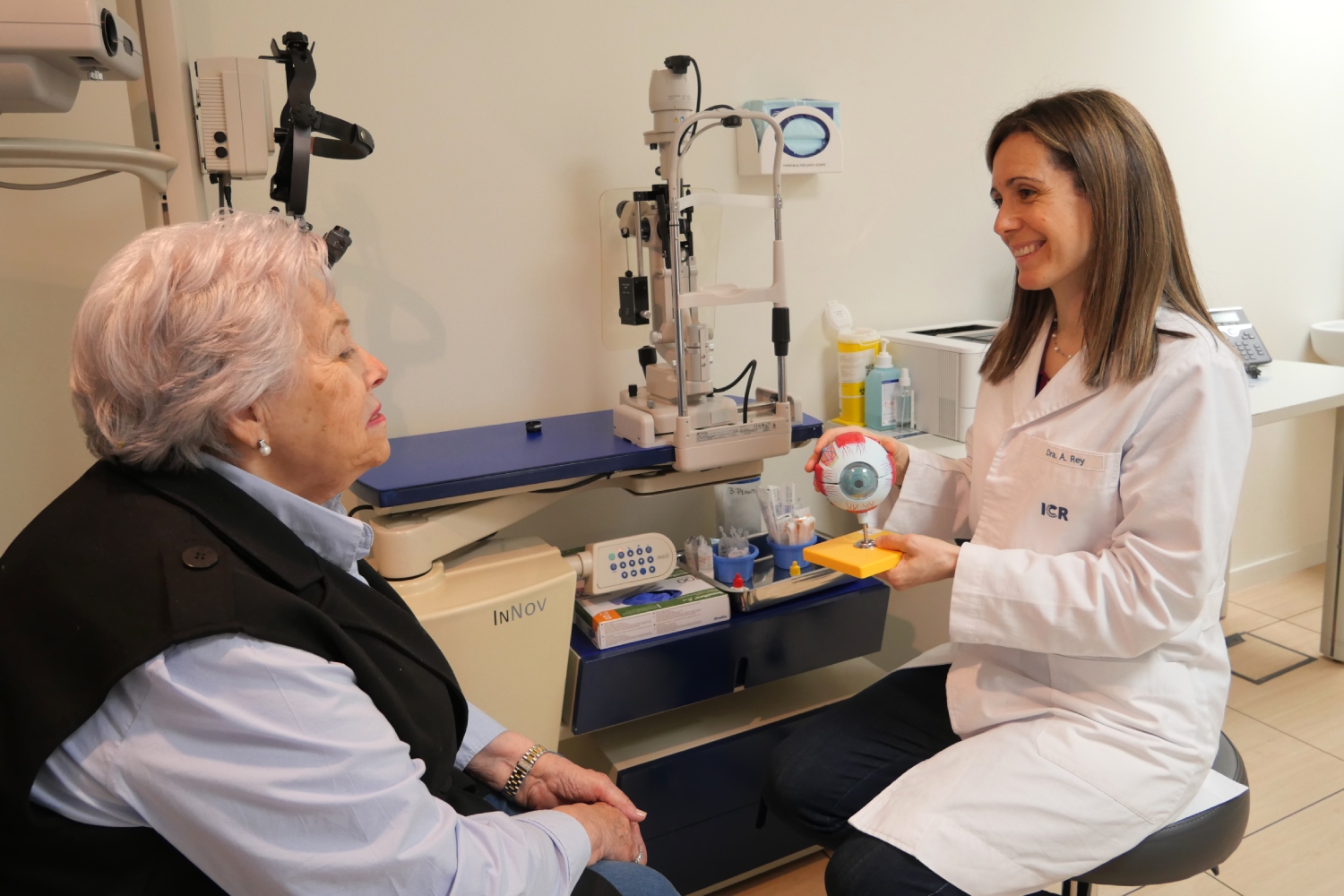
Intravitreal injections treatment is an option prescribed for many people with certain retinal conditions, such as macular degeneration or macular edema. Patients often have many questions for the medical team before treatment, which can be answered during a consultation. You can also start learning about it or supplement it with information on our website.
Patients who have more information about the treatment undergo it with greater peace of mind, because it is a safe and effective procedure carried out with medical rigor by a specialized team.
Diseases such as age-related macular degeneration cause vision problems that can eventually lead to blindness. In many cases, regaining lost vision is highly unlikely, but what intravitreal injections can achieve is slowing the progression of the disease and, therefore, the loss of vision.
These drugs must be administered via injections into the vitreous cavity to reach the eye at the appropriate concentration. The same medication taken orally would require very high doses to have a significant effect on the eyes.
Thus, in many cases, treatment with intravitreal injections is the most effective—or even the only—option to prevent the patient from losing further vision.
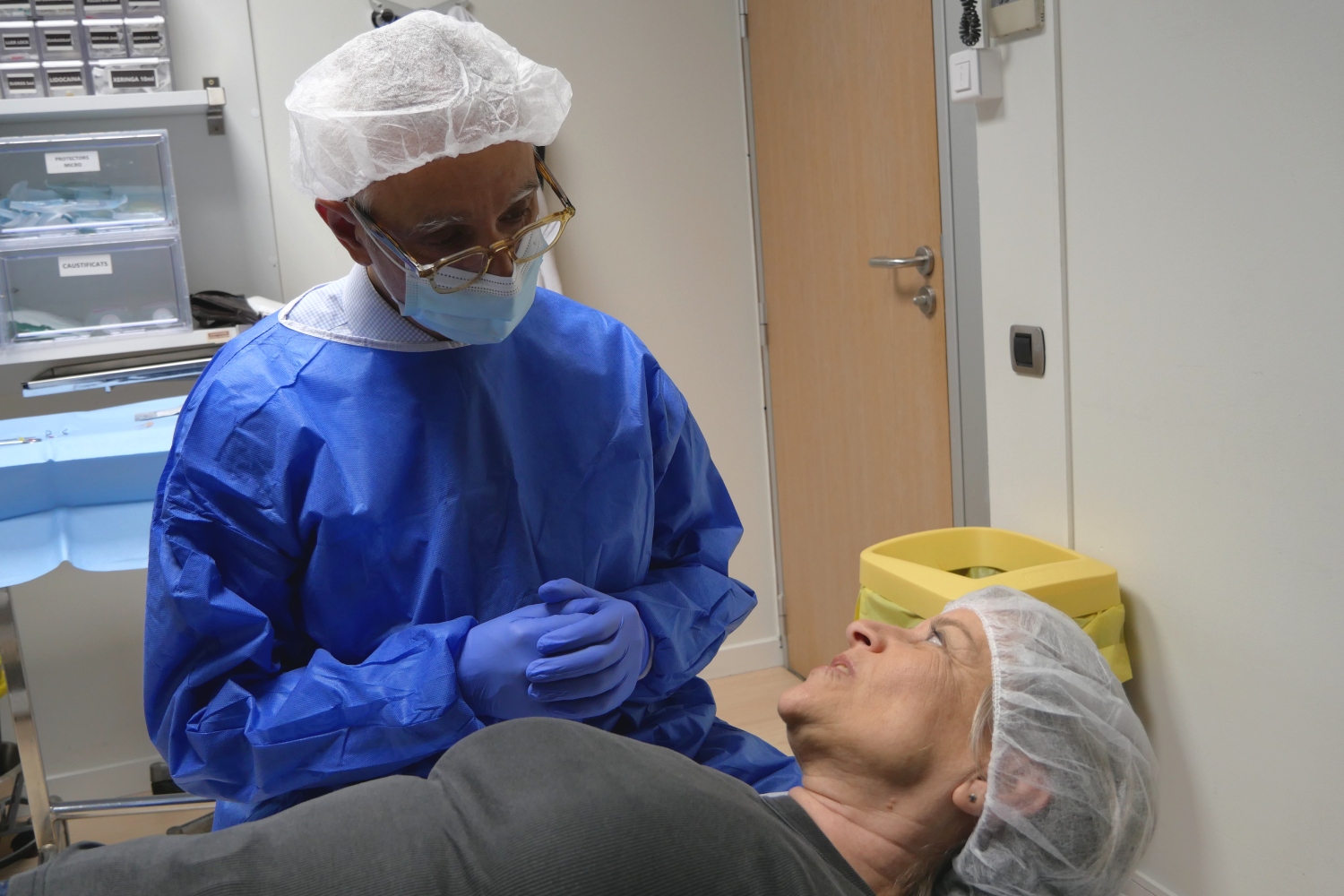
The procedure is quick (it takes just a few minutes) and outpatient (the patient can walk home the same day). In addition, in some cases at ICR, we can offer the option of administering the first dose of treatment on the same day it is prescribed, so that treatment begins sooner and the patient does not have to return on another day for the first session.
To administer the medication, the patient lies down on a treatment table, and the healthcare team ensures that all hygiene and safety precautions are followed. The procedure typically follows this sequence:
In some cases, additional sedation may be necessary, or certain steps may vary slightly.
Treatment with intravitreal injections is always performed by medical professionals with extensive knowledge and years of experience in this procedure. At ICR’s Department of Retina, we have a highly specialized medical team in intravitreal injections, who administer them on a daily basis. This gives them a deeper understanding of the common concerns of patients undergoing this treatment, to whom we always offer personalized care.


In most cases, the vision can be recovered after a surgery for retinal detachment: But if it is not treated, the patient’s vision could be irrevocably lost.

Intravitreal injections are used to administer drugs directly into the vitreous cavity in order to treat eye conditions and protect vision.

Diabetes is a chronic disease related with the endocrine system but that can result in disorders or complicactions in vision such as diabetic retinopathy.
Contact us or request an appointment with our medical team.



 Request an appointment